
Omega Speedmaster 145.022 Service 1968
Omega Speedmaster 145.022 Service
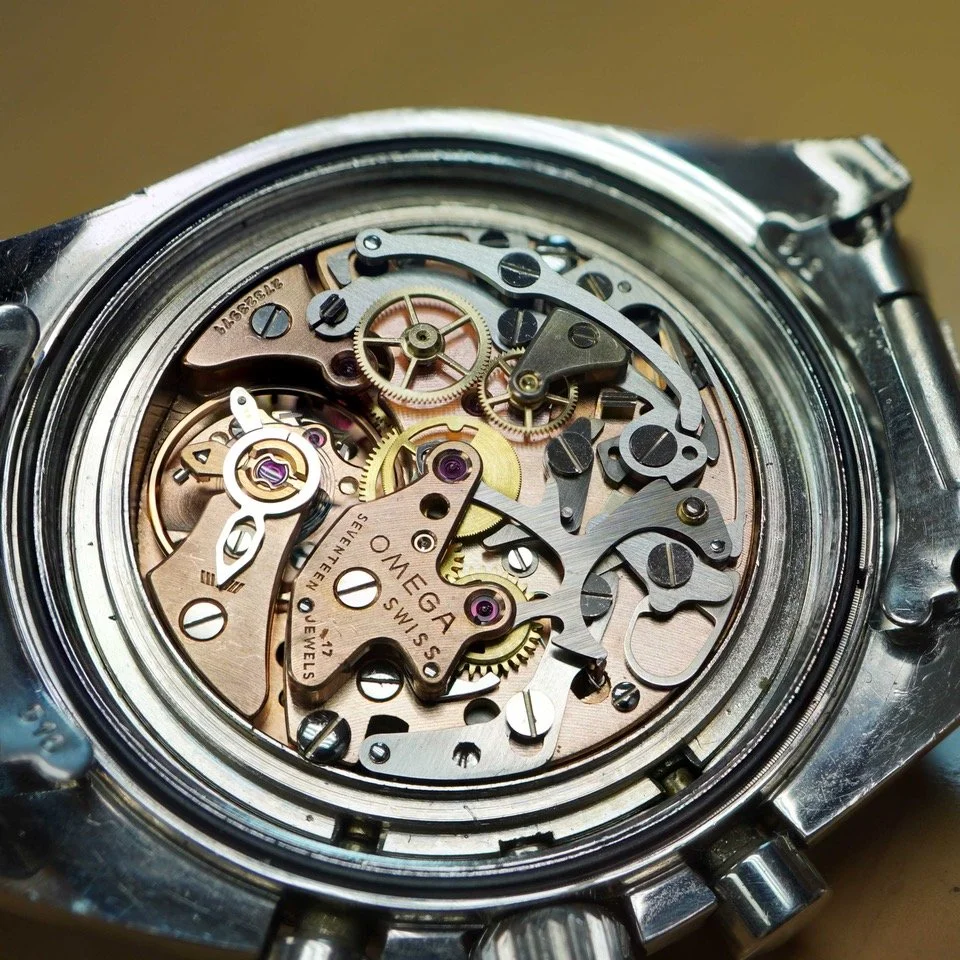
In 1968 Omega created calibre 861. Production for this calibre ended in 1997, where it was changed to the calibre 1861. This movement is copper plated which gives it a nice colour. Specifically this calibre was made from 1968- 1974. The reason we know this is because the chronograph blocking lever is made of steel in this one. If it was made out of delrin then it would have been made from 1971 - 1987.
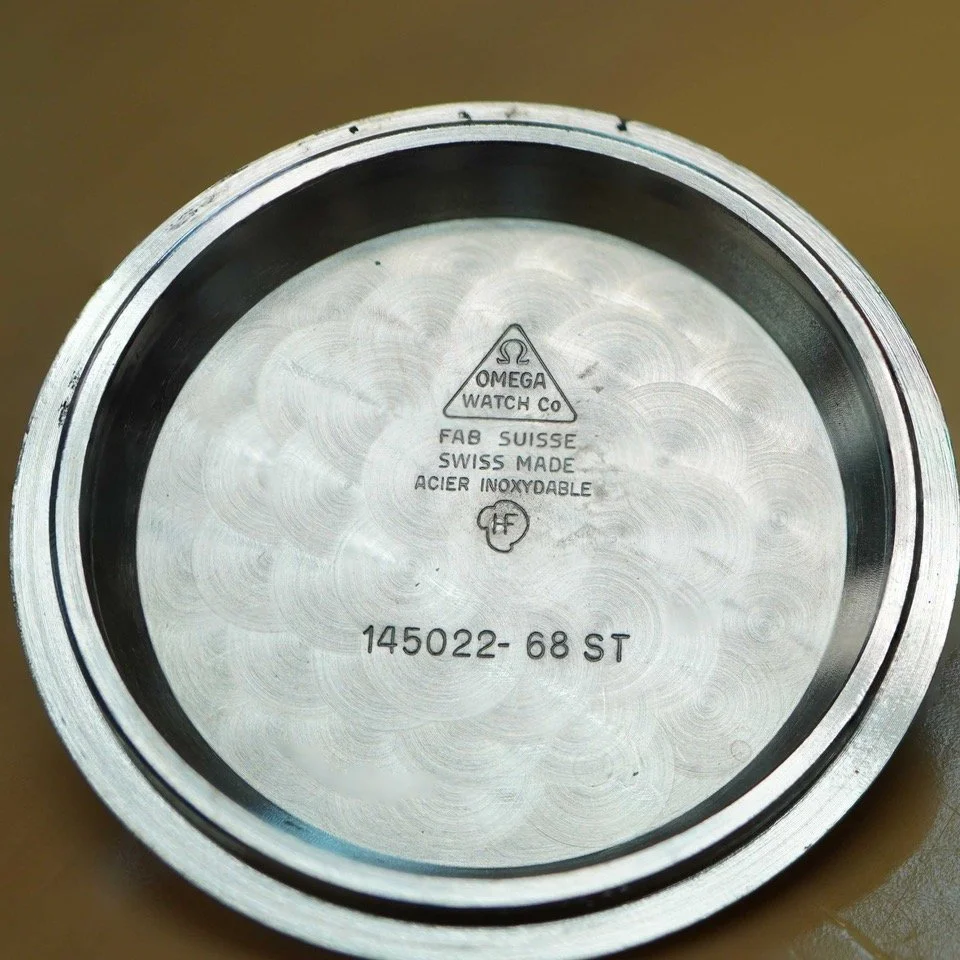
The movement with the steel blocking lever existed from 1968 to 1974. If you have a look on the inside of the case back you can see the year of production. it will often look like: 145.022 - 68 The last two numbers at the end denote the year.
This movement ran at 21600, had 17 jewels and gold plated intermediate chronograph driving wheel. It’s not until 1995 that the movement changed to 18 jewels.
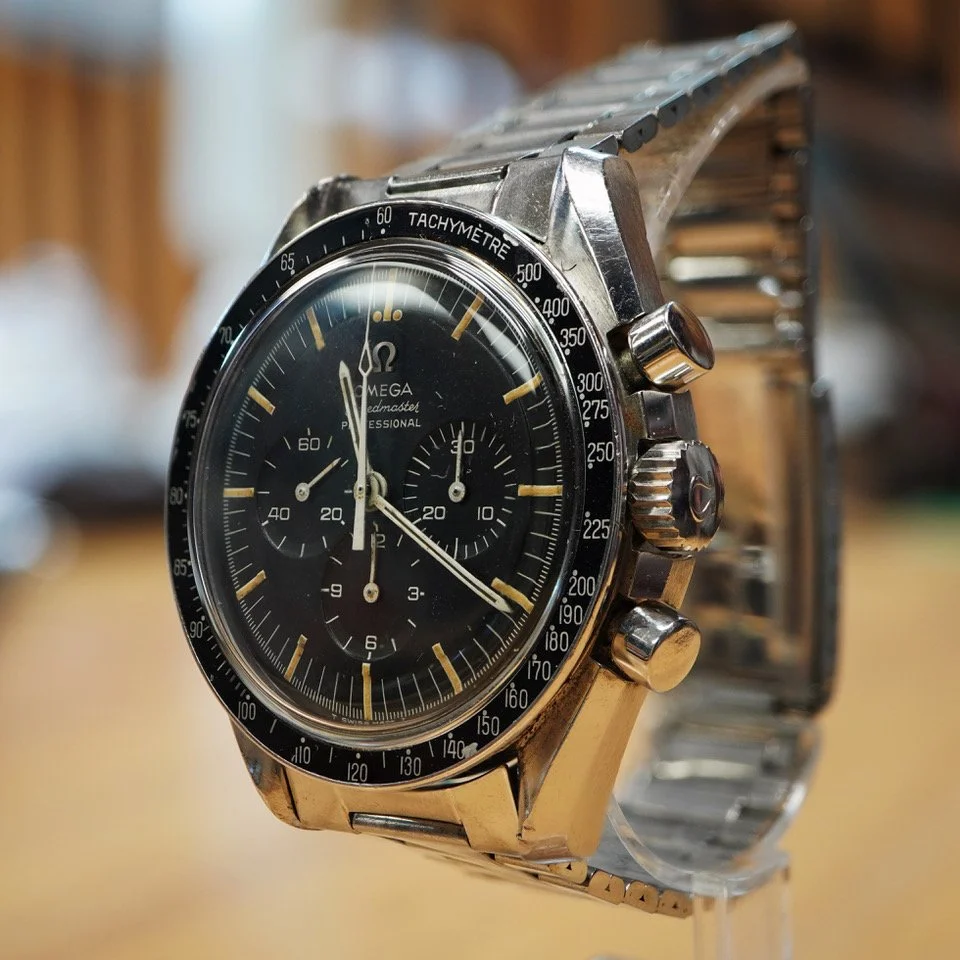
This case features the Asymmetrical twisted lugs. The only difference between twisted lugs and twisted flat lugs is that the latter has a flat top at the end of the lug. This case does not have flat lugs which is curious as twisted flat lugs were in production from 1967 to 1968. Which probably means they were using old cases first at the factory before using the new case design.
The Dial
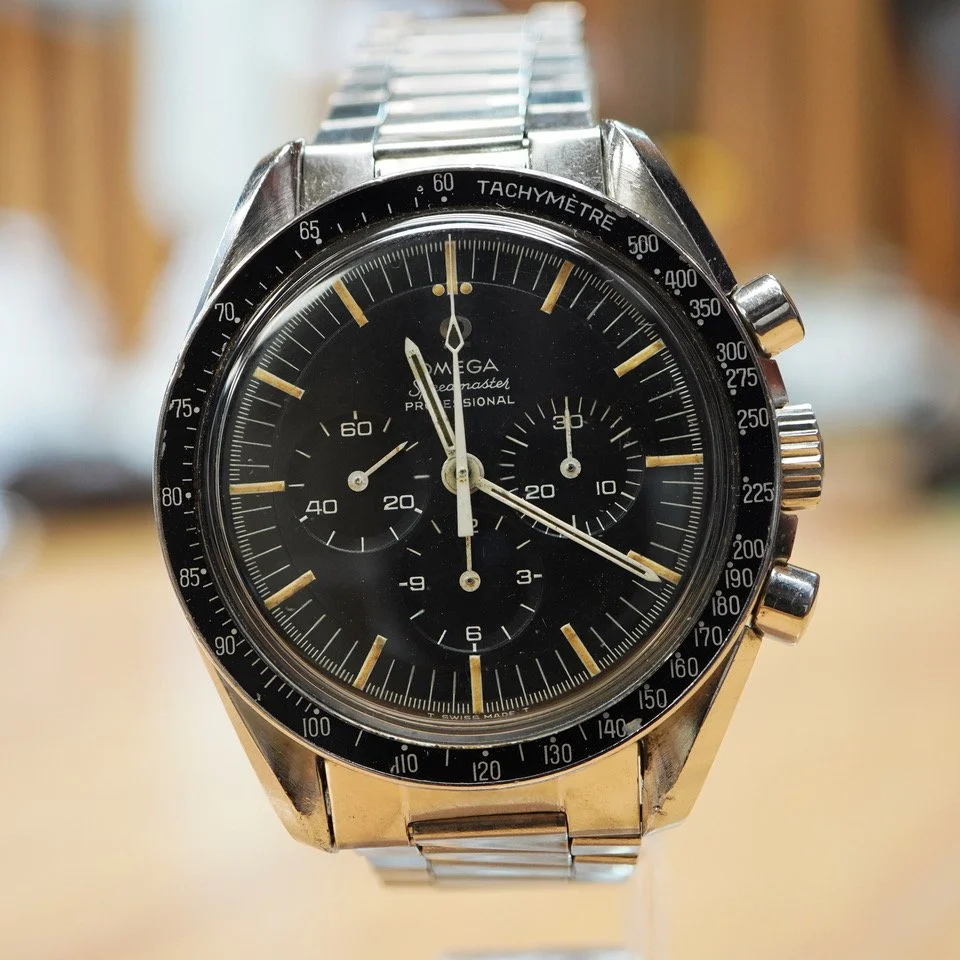
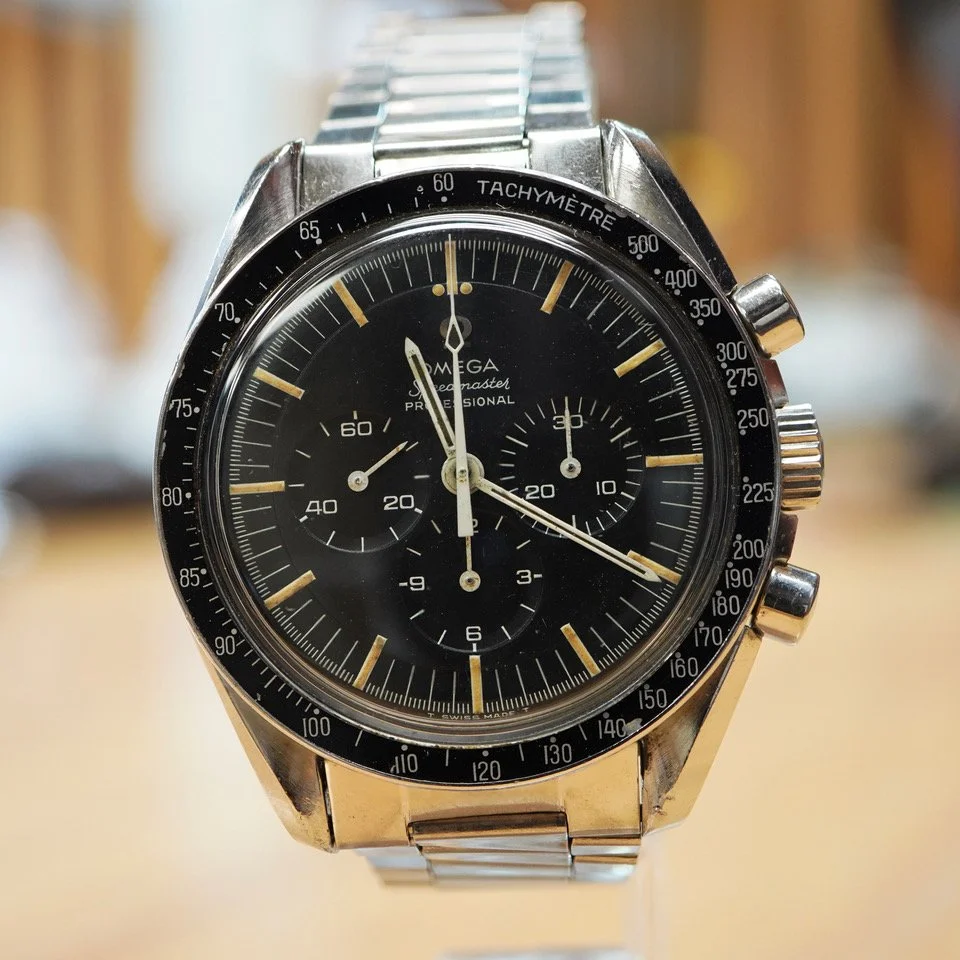
There is a lot of nuance in Omega Speedmaster dials. There are many tiny differences between years of production, refer to the photo above to get better understanding of what is being described. The key features of this 145.022 - 68 are as follows:
This dial is referred to as a Professional dial (as per the word professional on the dial) with a applied Omega logo. (in later models it is pad printed on)
Step dial
Recessed counter dials
Tritium Markers
Large gap between the Omega logo and the word “Omega”
The minute markers are long, for this to be the case the markers have to be more than half the length of the 5, 10, 15, 20 ect marker.
There is a round O in the word Omega on the dial
T SWISS MADE T inscription which was required after 1964. Close “T”
The letter “E” in Omega has a long middle stroke
The letter “G” has a medium length horizontal stroke.
The “S” in speedmaster has a medium lower loop and a curving top loop
“P” in speedmaster has a shorter than average tail
Long and high ligature between S and P
“M” with rounded first arch
“R” with a low and short loop
An important note is that the logo itself has changed over time in regards to its style and shape. While only subtle, the differences allow owners to help identify dials when purchasing second hand
Luminescence
Omega speedmaster dials initially used radium luminescence until 1961/62. Tritium paint was used on Omega speedy dials from 1962 to 1996. “T SWISS MADE T” was used on dials with tritium. Surprisingly from 1962 to 1964 omega dials did not have “T” on the dial. The Swiss government mandated that “T” be noted on dials on October 1963 and came up with requirements around radiation levels and requirements.
The Bezel
These bezels were made of steel with a black aluminium insert
Silver script
Tachymeter scale graduated to 500
Diameter 39.7
Marker dot diagonally below “70”
Marker dot above “90” referred to as dot over 90
Accented “E”
“C” stretched and closed off
Middle stroke in “E” is shorter than the others
“7” with serif
Found on the following references 2998-3 to -62, 105.002-62, 105.003-63 to -65, ST 145.003, 105.012-63 to -66, 145.012-67 and -68, 145.022-68 and -69
Hands
Hour, min, small hands all batton style, white, with tritium
Centre chrono seconds flat white counter weight, white, tritium
Crystal
Made of hesalite
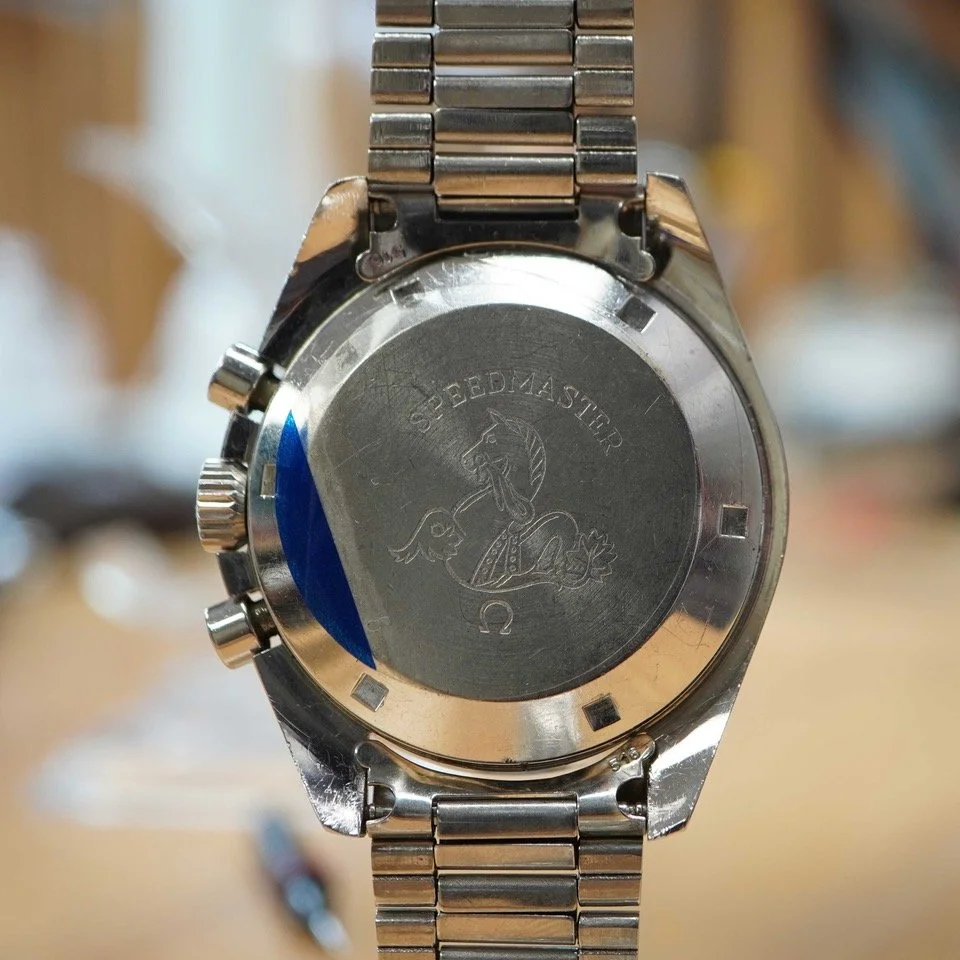
Case Back
Single Bevel
Circular “Speedmaster”
Omega logo
Crown
Narrow Omega logo
Flat feet
Pushers
Wide and tall
Bracelet
Type 1039/ 516 also referred to as “flat link”
In production from 1966 to 1972
At OBR Horology we have a passion for repairing and restoring Omega speedmasters. If you live in South Australia, come by and we would be happy to discuss what you need. If you would like a repair or restoration reach out to us at repairs@obrhorology.com.au or call us on 0423451991